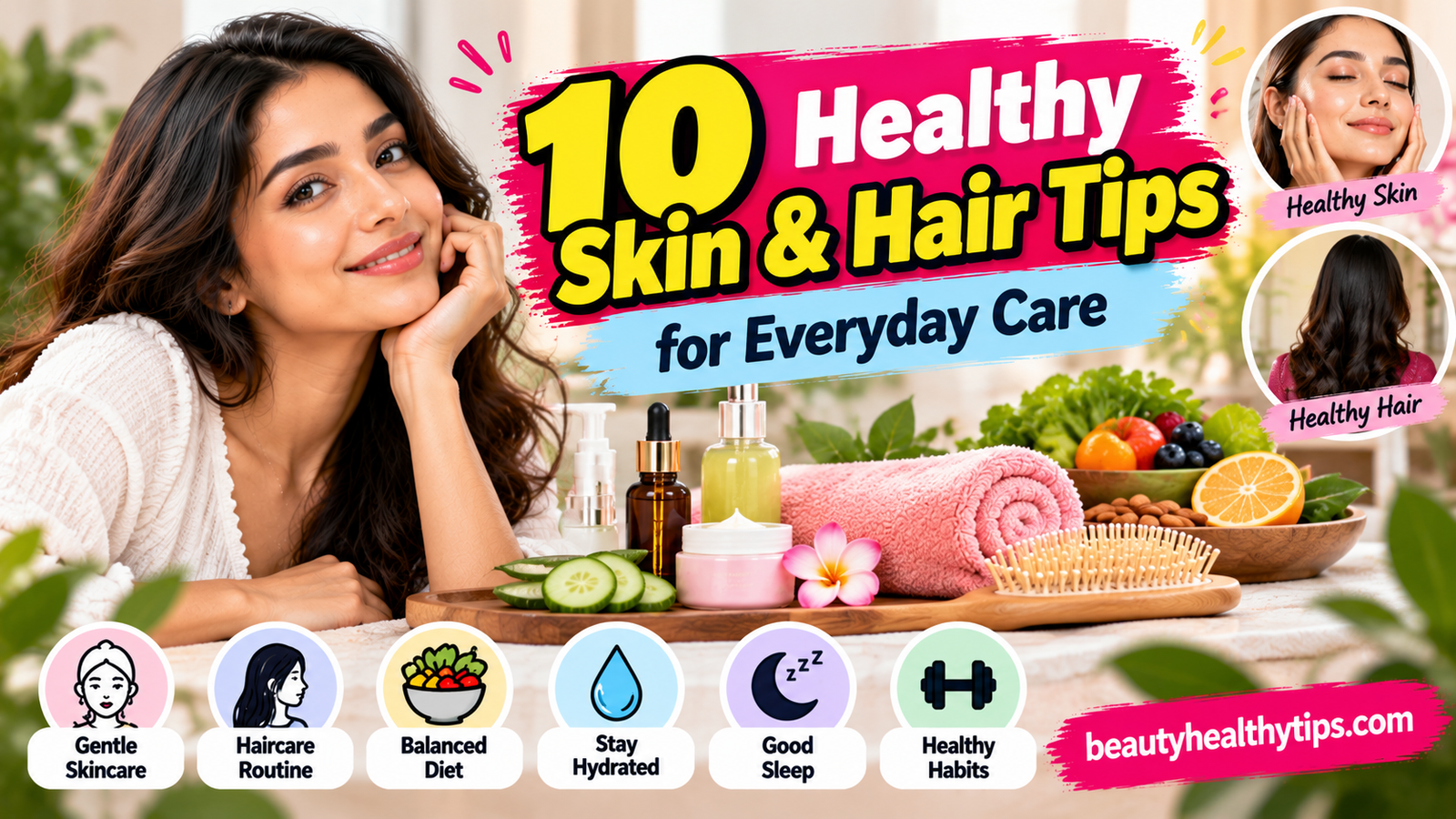
Healthy-looking skin and hair are influenced by many factors, including genetics, nutrition, personal care, environment, and daily habits. Although no routine can guarantee perfect skin or hair, simple and consistent care can help you maintain their condition.
You do not need an expensive collection of beauty products to get started. Focus on gentle skincare, appropriate haircare, balanced nutrition, and habits that support your overall health.
Here are 10 practical tips to consider.
1. Use a Gentle Cleanser for Your Skin
Table of Contents
Cleansing helps remove sweat, dirt, excess oil, and product residue.
Choose a cleanser that suits your skin and does not leave it feeling uncomfortably tight or irritated. Avoid harsh scrubbing and frequent use of strong exfoliating products.
If you have a persistent skin condition, a dermatologist can help you choose an appropriate routine.
2. Moisturize Regularly
Moisturizers help the skin retain moisture and support its protective barrier.
Ingredients such as glycerin and ceramides are commonly used in moisturizing products. The right formulation depends on your skin type and individual needs.
Apply moisturizer according to its instructions, particularly after washing if your skin tends to become dry.
3. Protect Your Skin From Sun Exposure
Sun protection helps reduce the risk of sunburn and long-term UV-related skin damage.
Consider these habits:
- Use broad-spectrum sunscreen with SPF 30 or higher.
- Reapply according to the product directions.
- Wear a hat and protective clothing outdoors.
- Seek shade when possible.
- Protect exposed areas, including the neck and hands.
Sun protection is useful throughout the year, although the amount of exposure varies with location, weather, and outdoor activity.
4. Eat a Varied, Balanced Diet
Your skin and hair need adequate nutrients as part of normal body function.
Build meals around a variety of foods, including vegetables, fruits, whole grains, protein sources, and healthy fats.
Protein is important for hair structure, while nutrients such as iron and zinc play roles in normal body function. However, taking extra supplements does not automatically improve hair growth or skin quality.
If you suspect a nutritional deficiency or experience significant hair shedding, seek medical advice before starting supplements.
5. Drink Enough Fluids
Adequate fluid intake supports normal body functions. Your needs depend on factors such as activity, temperature, diet, and health.
Keep water accessible during the day and drink more when appropriate for hot weather or physical activity.
Drinking excessive amounts of water will not automatically eliminate acne, reverse skin aging, or guarantee shiny hair.
6. Wash Your Hair According to Your Scalp Needs
There is no single washing schedule that works for everyone.
People with oily scalps may need to wash more frequently, while others may need less frequent washing. Consider your scalp condition, hair texture, exercise routine, and the products you use.
Choose a shampoo suited to your scalp and rinse thoroughly to remove residue.
7. Condition and Detangle Gently
Conditioner can help improve manageability and reduce friction during combing.
Apply it according to the product instructions, often focusing on the lengths and ends. Use a wide-tooth comb or another suitable detangling tool and work gently through knots.
Avoid forceful brushing, especially when hair is vulnerable to breakage.
8. Reduce Heat and Chemical Damage
Frequent high-heat styling, bleaching, and other chemical treatments can weaken hair and contribute to breakage.
To reduce damage:
- Limit unnecessary heat styling.
- Use a heat protectant when using hot tools.
- Choose lower heat settings where practical.
- Allow hair to dry naturally when convenient.
- Space out chemical treatments when possible.
- Avoid hairstyles that cause persistent pulling or pain.
If you notice substantial breakage or changes in your hair, consider consulting a qualified professional.
9. Make Sleep and Stress Management a Priority
Sleep supports overall health, while prolonged stress can affect well-being and may contribute to some forms of hair shedding.
Try to maintain a regular sleep schedule, take breaks during demanding days, and make time for activities that help you relax.
Most adults generally need at least seven hours of sleep each night, though individual needs vary.
Persistent stress or unexplained hair loss deserves appropriate professional attention rather than relying solely on beauty products.
10. Be Careful With Trending Home Remedies
Online beauty trends sometimes recommend applying ingredients such as lemon juice, baking soda, or undiluted essential oils directly to skin or scalp.
These ingredients can cause irritation or other unwanted reactions. Natural ingredients are not automatically safe for every person.
Use products formulated for their intended purpose and follow their instructions. Patch-test new products when appropriate, and discontinue use if irritation occurs.
A Simple Daily Skin and Hair Care Checklist
Morning
- Apply suitable moisturizer and sunscreen.
- Eat a balanced breakfast.
- Drink fluids according to your needs.
Evening
- Remove makeup and sunscreen.
- Cleanse and moisturize.
- Detangle your hair gently if needed.
- Follow a relaxing bedtime routine.
Weekly
- Wash hair according to your scalp needs.
- Clean reusable beauty tools.
- Review any products that cause irritation or discomfort.
Adjust the checklist to your routine. You do not need to add extra steps simply because they are popular online.
Frequently Asked Questions
What is the best daily routine for healthy skin and hair?
A useful foundation includes gentle skincare, sun protection, appropriate shampoo and conditioner, balanced nutrition, adequate sleep, and reduced exposure to damaging styling practices.
Which foods are good for skin and hair?
A varied diet containing adequate protein, vegetables, fruits, whole grains, and healthy fats supports overall nutrition. No single food guarantees better skin or faster hair growth.
Can drinking water improve skin and hair?
Adequate hydration supports normal health, but drinking extra water beyond your needs is not a proven cure for common skin or hair concerns.
Why is my hair falling out more than usual?
Hair shedding can have many causes, including genetics, stress, illness, hormonal changes, medications, and nutritional deficiencies. Sudden, severe, or persistent hair loss should be assessed by a healthcare professional.
Conclusion
Healthy-looking skin and hair are supported by consistent, appropriate care rather than quick fixes. Use gentle products, protect your skin from the sun, handle your hair carefully, eat a balanced diet, and get adequate rest.
Build habits you can maintain, and seek professional advice when a skin or hair concern persists or changes unexpectedly.